Exterior Window Cleaning Costs in Hanalei: What Changes an Estimate

Updated: September 28, 2026
Exterior window cleaning quotes vary because the job itself varies. A single-story home with easy access and soft water is a different job from a three-story coastal property with salt film and hard-water spots. No honest cleaner can give you a firm price over the phone without seeing the glass, counting the windows, and checking how safely a crew can reach them. This article explains the verified factors that change a quote, what a complete written estimate should include, and the questions that prevent surprise charges.
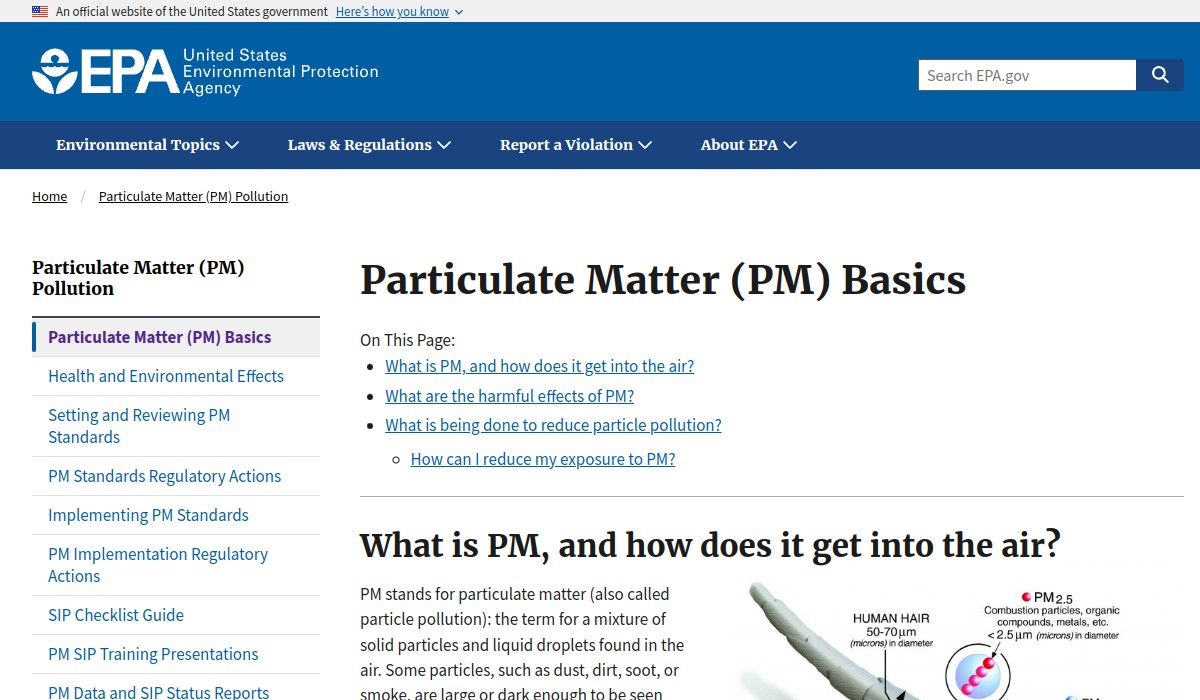
Screenshot of the cited epa.gov page: Particulate Matter (PM) Basics. Open the linked citation for the live page and full context.
Verified source context: The U.S. EPA defines PM10 as inhalable particles with diameters generally 10 micrometers and smaller, and PM2.5 as fine particles 2.5 micrometers and smaller. These size definitions do not establish a window-cleaning frequency. Read Particulate Matter (PM) Basics.
What Can Be Said About Cost Without Inventing Prices

No specific price or range can be stated for exterior window cleaning in Hanalei, Haena, or Koloa without a site visit and a written quote. The U.S. EPA defines particulate matter by size—PM10 and PM2.5—but those definitions do not set a cleaning frequency or price. The U.S. Geological Survey explains that water hardness comes mainly from dissolved calcium and magnesium, which can leave mineral residue on glass, but it does not provide a cost formula. Any number you see online is either a national average that may not apply to Kauaʻi or a marketing estimate, not a verified local price.
What can be said is that cost is driven by measurable, job-specific factors. A transparent provider will explain those factors and itemize them in a written quote. That is the only way to compare estimates fairly.
Verified Cost Drivers for Exterior Window Cleaning
These are the factors that reliably change the amount of labor, equipment, and time a job requires. They are not prices, but they are the reasons prices differ.
Access Difficulty
Windows above the first story, windows over landscaping, or windows on steep terrain require ladders, lifts, or water-fed poles. Each adds equipment and safety time. A ground-floor window with a clear path is faster and simpler than a second-story window over a garden bed.
Window Count and Size
More windows mean more time. Larger windows mean more surface area. A quote should state the number of windows and whether the price is per window, per pane, or per job. If a quote does not say how many windows are included, ask.
Glass Condition and Buildup
Salt air, hard water, and trade winds leave a film on Kauaʻi windows. The U.S. Geological Survey notes that hard water can leave mineral residue on glass. If the glass has heavy mineral deposits, salt crust, or paint overspray, the cleaner may need a stronger solution or more scrubbing. That adds time and may require a different cleaning method, such as pure-water cleaning.
Water Quality
Local water hardness affects how easily spots form and how much rinsing is needed. The U.S. Geological Survey explains that water hardness mainly reflects dissolved calcium and magnesium. If your water is hard, the cleaner may need to use filtered or deionized water to avoid leaving spots. That equipment costs more to operate, and the quote should reflect it.
Safety Requirements
High windows, uneven ground, or proximity to power lines may require fall protection, a second worker, or a lift. These are not optional add-ons; they are required for a safe job. A quote that ignores safety is not a bargain—it is a risk.
What a Complete Quote Should Include
A written quote is not just a number. It is a description of the work, the conditions, and the assumptions. Before you accept any estimate, check that it includes these items.
Scope of work: Exactly which windows are included—exterior only, or interior and exterior? Are screens and tracks included? The quote should say so.
Window count and location: How many windows, and where are they? If the quote says “all windows,” ask for a count.
Cleaning method: Will they use traditional squeegee and soap, pure water, or a water-fed pole? The method should match the glass condition and access.
Special treatments: If the glass has hard-water spots, salt film, or paint, the quote should list any extra treatment and its cost.
Equipment and safety: If ladders, lifts, or fall protection are needed, the quote should state that and include the cost.
Labor and time estimate: How many workers, and how long will the job take? This helps you compare quotes that look similar but are not.
Payment terms and schedule: When is payment due? Is a deposit required? What happens if weather delays the job?
Business details: The quote should include the company name, contact information, and license or insurance information if applicable.
If a quote is missing any of these, ask for a revised version. A professional cleaner will not hesitate to provide details.
Questions That Prevent Surprise Charges
Ask these questions before you book. They are designed to reveal hidden costs and unclear assumptions.
1. “Is this price for exterior windows only, or does it include interior and screens?”
Many quotes cover exterior glass only. If you want interior cleaning, screens, or tracks, the price will change. Confirm what is included before you compare.
2. “How do you handle hard-water spots or salt film?”
If your windows have mineral buildup, the cleaner may need a special solution or pure water. Ask if that is included in the quote or billed separately. The U.S. Geological Survey explains that hard water can leave mineral residue, so this is a common issue on Kauaʻi.
3. “What happens if the job takes longer than estimated?”
Some companies charge by the hour, others by the job. If the quote is hourly, ask for a not-to-exceed amount. If it is a flat rate, ask what happens if the crew finds unexpected damage or extra buildup.
4. “Are there any additional fees for travel, equipment, or disposal?”
Some companies add a travel fee for remote areas. Others charge extra for ladder use or water treatment. Ask for a complete list of fees before you agree.
5. “Can you provide a written, itemized quote?”
A verbal estimate is not a quote. A written quote protects you and the cleaner. It should list every service, every fee, and the total. If a company refuses to put it in writing, choose another company.
How to Compare Quotes Fairly
Once you have two or three written quotes, compare them line by line. Do not just look at the bottom line. One quote may include interior cleaning and screen washing; another may not. One may use pure water; another may use soap and squeegee. One may include safety equipment; another may assume you will provide a ladder.
Make a simple table with the key factors: window count, scope, method, special treatments, equipment, and total. If a quote is missing a factor, ask for clarification. The goal is not the lowest price—it is the clearest scope of work for a fair price.
Factor | Quote A | Quote B | Quote C
Window count | ☐ | ☐ | ☐
Exterior only or interior+exterior | ☐ | ☐ | ☐
Screens and tracks included | ☐ | ☐ | ☐
Cleaning method stated | ☐ | ☐ | ☐
Special treatments listed | ☐ | ☐ | ☐
Equipment and safety fees | ☐ | ☐ | ☐
Total price | ☐ | ☐ | ☐
Use this table as a checklist. If a quote does not answer a row, ask the company to fill it in. A complete quote makes comparison easy.
One Natural Next Step
If you are ready to get a written quote for exterior window cleaning, contact a local provider that serves your area. Kamaliʻi Window Cleaning lists exterior window cleaning, interior window cleaning, screen cleaning, and track cleaning on its service page. You can also review the full services list to see what is included. When you call, ask for a written, itemized quote that covers the factors above. That is the best way to avoid surprises and get clear, streak-free windows.
Comments